In Which I Decide This Might Actually Be Possible
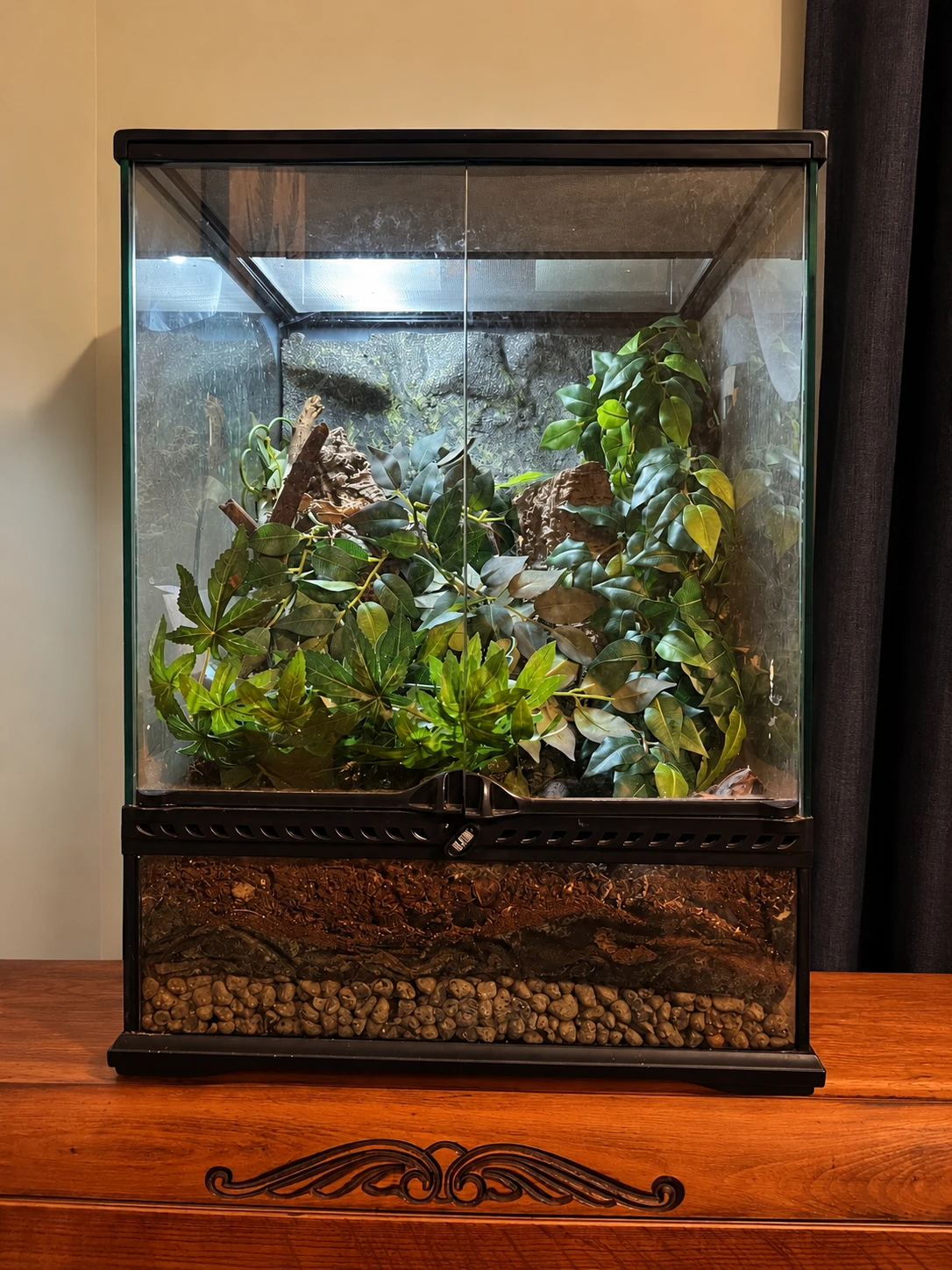
This started, as many questionable decisions do, with me having half an hour to spare.
The snail idea had been sitting in Concepts for a while.
It had originated considerably earlier, while I was washing dishes and thinking about consciousness, as one does.
Specifically, I had started wondering about temporal awareness.
Lots of animals respond to things happening now. That's easy.
Some can learn that one thing predicts another thing.
Some appear able to anticipate something that hasn't happened yet.
And somewhere, presumably, there is a line.
On one side of that line is an organism capable of behaving differently because something is going to happen in the future.
On the other side is an organism just getting on with whatever is happening now.
Where is the line?
Eventually my brain arrived at snails.
Because apparently that's what happens when I wash dishes.
The resulting idea — Do Snails Know About Tomorrow? — was deposited safely in Concepts, where it could remain an interesting question without inconveniencing anybody.
Until today.
I had half an hour free over lunch and made the mistake of wondering what would actually be involved in keeping a few garden snails.
Not laboratory snails.
Not a serious research facility.
Just some local garden snails temporarily relocated into a decent enclosure while I conducted a small, slightly ridiculous experiment to see whether they could learn that something particularly desirable appeared at the same time every day - and eventually start turning up before it did.
The first question was husbandry.
How difficult is it to keep a snail properly?
Because there are limits.
If the answer involved specialist equipment, complicated feeding regimes or, as I put it at the time, wiping little snail butts every week, then the project was going straight back into Concepts.
Unfortunately, snails are quite easy to look after.
Bugger.
Then I remembered something else.
I already own a vivarium.
It used to belong to Splat, a tiny tailless gecko with an unfortunate name and an impressive commitment to escaping. After Splat took advantage of the dodgy lock and a very slightly open window at 3am one summer night, his vivarium became storage for an unreasonable quantity of artificial foliage.
There it was.
Glass enclosure.
Deep substrate area.
Ventilation.
Lighting.
Heat available if ever needed.
Bark.
Hiding places.
Secure doors.
Well, secure against snails. Splat eventually discovered that repeatedly launching himself at one of them could occasionally cause the lock to drop, but I'm reasonably confident this particular security vulnerability is beyond a garden snail.
We discussed substrate, humidity, calcium, feeding, lighting and whether the existing ventilation would work.
It would.
In fact, with some refurbishment, the Splatarium was irritatingly close to being exactly what I needed.
Then came surveillance.
Because while the possibility that a snail might anticipate a future event is genuinely fascinating to me, sitting beside a vivarium for thirty minutes watching one travel ten centimetres is not.
A small infrared camera could record the enclosure overnight.
A temperature and humidity logger could tell us whether apparent changes in behaviour were actually just Gary responding to environmental conditions.
A clipboard could record my own movements in and out of the room so that we could distinguish:
Gary knows cucumber is coming
from
Gary knows the large swearing mammal has just arrived and food usually follows.
This was becoming alarmingly doable.
Then we found research showing that garden snails can learn.
They can form associations.
They can remember.
They can use environmental context.
They can locate preferred foods.
And cucumber, wonderfully, appears to be particularly attractive to them.
At some point during all this, the question stopped being:
Could I actually test this?
And became:
Why aren't I testing this?
That was the moment the Concept escaped.
Equipment started being discussed.
Springtails were ordered as a bioactive clean-up crew.
A £6 bedside lamp was purchased because apparently even the ambient lighting in my bedroom now has experimental implications.
The empty Splatarium stopped looking like an old gecko enclosure full of plastic plants.
It became Garyville.
There are still approximately nine hundred ways this could produce absolutely nothing of interest.
The snails may completely ignore the schedule.
They may learn that cucumber appears but show no sign whatsoever of anticipating it.
They may turn out to be far more interested in humidity, sunset, vibrations, my movements or some environmental cue I haven't thought of yet.
That is rather the point.
I don't know what they'll do.
And apparently I've decided I want to find out.
So, on 30 September 2026, Do Snails Know About Tomorrow? officially ceased being something ridiculous I once thought about while washing dishes.
It became a Project.
Oh, bollocks.